Part 1: The Mother I Tried Not to Be
I told myself I was doing the right thing when I left my newborn son at the hospital.
That lie was the only thing that made it possible to walk away.
His name was Noah. He was born with Down syndrome, and I was born with a body that already felt incomplete—one real leg and one prosthetic made of brushed metal and routine pain.
In the hours after his birth, I convinced myself I was not abandoning him. I was protecting him—from stairs I struggled to climb, from stares I already knew too well, from a life that looked too heavy for someone like me to carry.
And from my mother’s voice.
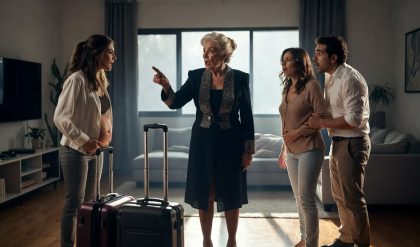
“You can barely stand on your own,” she had said, watching me adjust the strap of my prosthetic beside the hospital bed. “Don’t bring home another helpless life.”
She didn’t raise her voice. She didn’t need to. Some words don’t shout to be remembered—they settle.
So I signed the papers.
I kissed Noah once on the forehead, noticing how warm he was, how impossibly small. His hand opened as if searching for something he had already lost.
Then I left.
At home, the silence was louder than anything I had ever heard.
I had prepared everything. The crib by the window. The tiny clothes folded too neatly. The second blue blanket I had made when I still believed love could be planned.
That blanket became the only thing I could touch without feeling like I was disappearing.
On the second day, I tried to erase him from the apartment. I threw away baby cereal. I folded away hope like laundry. But grief doesn’t leave when asked. It waits.
On the third day, the call came.
“He only calms down when we press your blue blanket to his cheek.”
My hands went numb before the nurse even finished speaking.
My son wasn’t calming down for perfection. Not for professionals. Not for strangers with trained hands.
Only for something that smelled like me.
Like my skin cream. Like my effort. Like the life I thought made me unworthy.
That was the moment I understood something I had been running from since the accident that took my leg years ago:
I had been surviving my body.
But I had been abandoning myself.
And now I had done it to my child.
I grabbed my coat and left.
The prosthetic rubbed my skin raw with every step, but I didn’t stop. Every mile toward the hospital felt like walking back into a version of myself I had tried to erase.
Part 2: The Name in the Red Folder
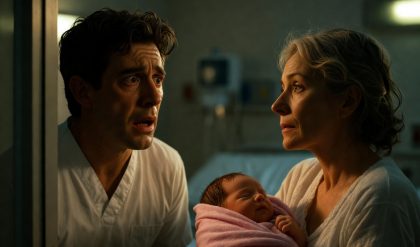
The hospital looked exactly the same as it had three days earlier—bright, sterile, indifferent to the things people lose inside it.
Sarah, the nurse, met me at the nursery doors.
“He’s been waiting,” she said quietly.
Noah lay under my blue blanket, small fists opening and closing in sleep. When I stepped closer, his eyes fluttered open, unfocused but searching.
Like he recognized something before he recognized me.
“My baby,” I whispered.
He didn’t cry. Not immediately.
Just reached.
And when his fingers touched mine, something inside me cracked—not loudly, but completely.
I barely had time to breathe before the door behind me opened.
“Ms. Parker.”
A woman stood there holding a red folder. Child Protective Services.
She didn’t look angry. That would have been easier.
She looked prepared.
“There’s a proposed temporary placement,” she said, flipping the folder open.
And then I saw it.
My mother’s name.
Written neatly. Already waiting where my hesitation had been.
“She contacted us after your discharge,” the woman continued. “She stated she is willing to assume care.”
The room tilted slightly.
Of course she had.
My mother had never believed I was capable of holding anything fragile without breaking it—or being broken by it first.
I looked down at Noah again. His small hand had wrapped around my finger now, weak but certain, as if he had made his decision long before the adults in the room had made theirs.
Something sharp rose in my chest.
Not fear this time.
Something closer to rage.
“I didn’t ask for this,” I said.
The woman didn’t move. “We’re required to evaluate all safety options.”
Safety.
That word suddenly felt like a weapon people used when they didn’t trust you to survive your own life.
I looked at my son, at the blanket that had become his anchor, and then at the red folder that wanted to replace me before I had even begun.
And for the first time since the accident, since the hospital years ago, since all the moments I had accepted other people’s definitions of me—
I didn’t look away.
“I’m not unsafe,” I said quietly. “I’m just not the version of me she wants.”
Noah made a small sound then, almost like he was agreeing.
The nurse stepped closer. “What do you want to do?”
The answer should have been complicated.
It wasn’t.
“I’m taking him home,” I said.
But even as I said it, I knew something harder was coming.
Because my mother wasn’t done.
And neither was the life I had tried to leave behind.